Beef Rendang
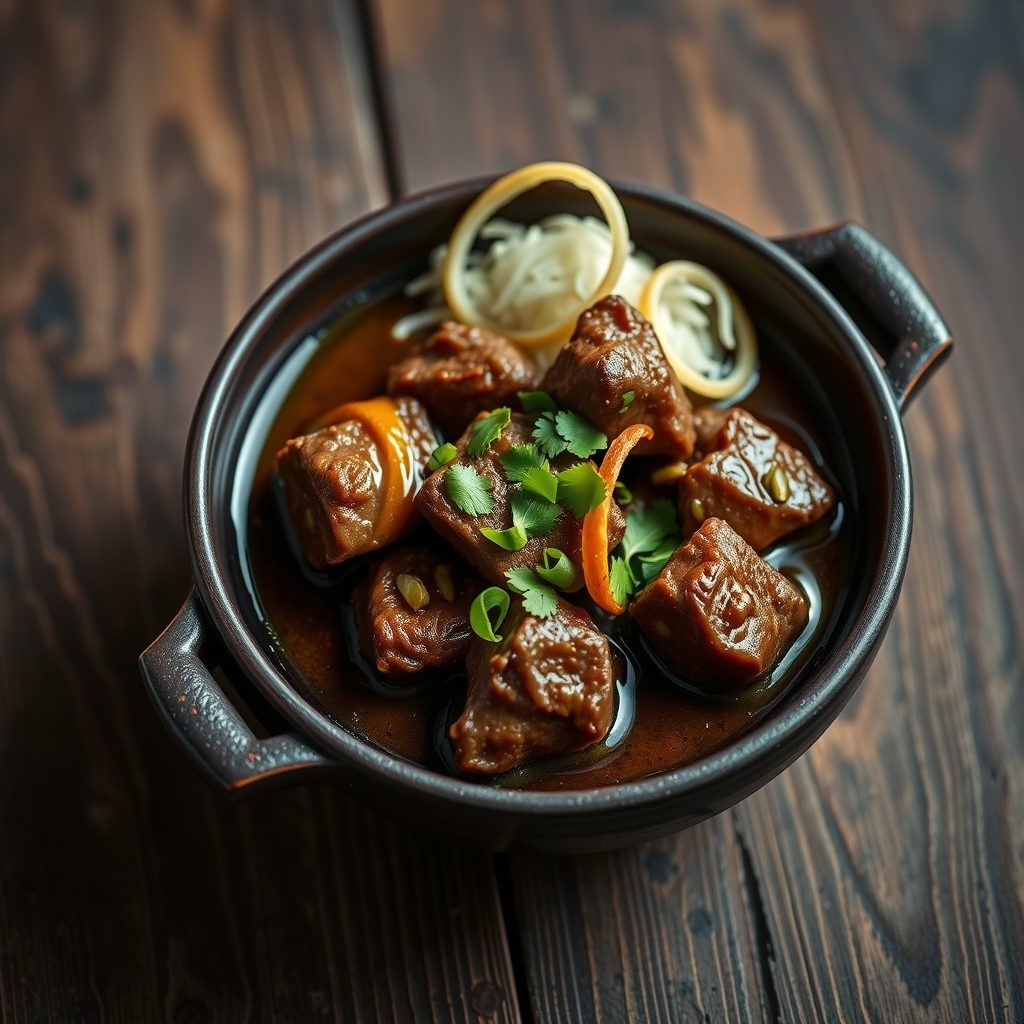
Rendang is the dish people mean when they say Indonesian food is about patience. Beef is simmered for hours in coconut milk and a spice paste until the liquid is gone entirely and the meat is coated in a dark, almost dry paste. It is not a wet curry. If there is sauce on the plate, it is not finished.
Ingredients
- 1.2 kg beef chuck or shin, cut into 4 cm cubes
- 1.2 litres thick coconut milk (first press if you can get it)
- 6 shallots, roughly chopped
- 8 garlic cloves
- 30 g fresh ginger, peeled
- 20 g fresh galangal (laos), peeled
- 2 lemongrass stalks, white part only, sliced
- 6 to 10 dried red chillies, soaked in hot water and drained (adjust to taste)
- 1 teaspoon ground turmeric
- 1 teaspoon ground coriander
- 4 kaffir lime leaves
- 2 turmeric leaves (optional)
- 3 asam kandis or 1 tablespoon tamarind paste
- 1 tablespoon salt, plus more to taste
- 1 teaspoon palm sugar
- 4 tablespoons cooking oil for the paste
Method
- Blend the shallots, garlic, ginger, galangal, lemongrass, soaked chillies, turmeric and coriander with a splash of oil into a smooth paste. It should be fine enough that no chunks remain, because a coarse paste stays gritty after hours of cooking.
- Heat the oil in a wide, heavy pot over medium heat. Fry the paste for 8 to 10 minutes, stirring constantly, until it darkens, smells nutty rather than raw, and the oil separates at the edges. This step cannot be rushed. Under-fried paste makes the finished dish taste raw.
- Add the beef and stir to coat. Cook for 3 to 4 minutes until the outside of the meat changes colour.
- Pour in the coconut milk, add the kaffir lime leaves, turmeric leaves if using, asam kandis and salt. Bring to a gentle simmer.
- Simmer uncovered on low heat for 2 ½ to 3 hours. Stir every 15 to 20 minutes, scraping the base of the pot. As the liquid reduces, stir more often — the last hour is when it catches.
- After about 2 hours the sauce will thicken and oil will pool at the surface. This is the beginning of the end. Keep going.
- Continue until the liquid is fully absorbed and the beef is coated in a dry, dark brown paste. This normally takes 3 to 4 hours total. Add the palm sugar in the last 20 minutes and taste for salt.
- Rest off the heat for 10 minutes before serving with steamed rice.
Notes and tips
- Use the widest heavy pot you own. A wide surface reduces the coconut milk faster and more evenly than a deep pot.
- Thick, high-quality coconut milk matters more than any other ingredient. Thin or watered-down milk will not reduce properly and the dish stays soupy.
- If the paste tastes bitter or raw after frying, it was undercooked. There is no fix later; start that step again.
- Rendang genuinely improves the next day and keeps for several days refrigerated. Reheat gently with a splash of water.
- For a faster version, a pressure cooker cuts the simmer to about 40 minutes, then finish uncovered for 20 to 30 minutes to dry it out. The texture is slightly less traditional but close.
Questions
How do I know when rendang is done?
When the coconut milk has fully reduced, oil has separated, and the meat is coated in a dry dark paste rather than sitting in sauce. It should look almost like a dry-spiced meat, not a curry.
Can I use a slow cooker?
Yes. Brown the paste and beef as written, then cook on low for 6 to 8 hours with the lid off at the end to reduce. Slow cookers trap moisture, so the drying stage needs the lid off.
Is rendang very spicy?
It is as spicy as you make it. The chilli count is the only variable; the paste quantity below is a medium-to-hot home standard. For a mild version use 4 dried chillies and remove the seeds.
What cut of beef is best?
Chuck, shin breast, or any cut with connective tissue. Lean steak dries out over three hours of cooking. Fat and collagen are what make rendang tender.
Cooked it? Tell us how it went on the contact page — corrections and regional variations are always welcome.
More Indonesian recipes

Cooking notes: read our Indonesian Pantry Essentials and Kecap Manis Guide.