Char Kway Teow
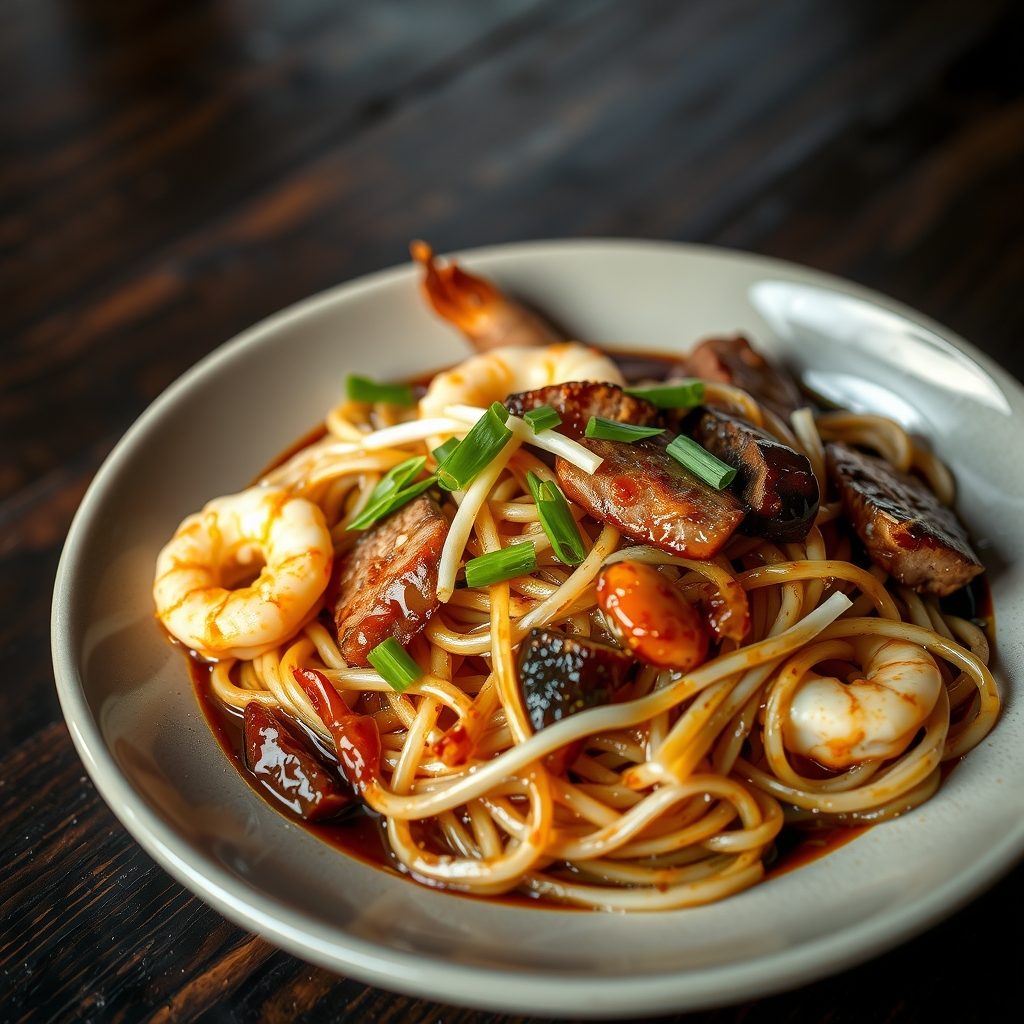
Char kway teow means, roughly, fried flat noodles, and the char is the point: the noodles need to catch a little on a very hot wok so they take on a smoky edge. It is a Penang hawker dish, cooked to order in about three minutes and never in a large batch. Home versions fail when the pan is not hot enough or the pan is too crowded, so the noodles steam instead of fry. One or two portions at a time is the whole trick.
Ingredients
- 300 g fresh flat rice noodles, at room temperature
- 2 tablespoons dark soy sauce
- 1 tablespoon light soy sauce
- 1 tablespoon kecap manis
- 1 teaspoon chilli paste or sambal oelek
- 3 tablespoons cooking oil
- 3 garlic cloves, finely chopped
- 1 Chinese sausage (lap cheong), thinly sliced
- 8 prawns, peeled
- 60 g blood cockles or extra prawns (optional)
- 2 eggs
- 80 g bean sprouts
- 4 garlic chives or 1 small bunch of Chinese chives, cut into 4 cm lengths
- 1 teaspoon sugar
- White pepper
Method
- Separate the noodles with your hands before cooking. If they are cold from the fridge they will clump and tear; let them sit out for half an hour.
- Mix the dark soy, light soy, kecap manis, chilli paste and sugar in a small bowl. Everything moves fast once the wok is hot, so nothing can be measured mid-cook.
- Heat a wok over the highest heat your hob will give for a full two minutes. Add the oil and swirl.
- Fry the garlic for 10 seconds, then add the Chinese sausage and prawns. Cook for 45 seconds until the prawns turn opaque.
- Push everything to one side, crack in the eggs and scramble them roughly for 20 seconds, then mix through.
- Add the noodles and pour the sauce over. Toss continuously for 60 to 90 seconds, pressing the noodles against the hot metal and letting them sit for two seconds at a time. That contact is what produces the char.
- Add the bean sprouts and chives, toss for another 30 seconds, season with white pepper and serve immediately.
Notes and tips
- A domestic electric hob struggles here. A cast-iron wok or a heavy carbon steel pan preheated for several minutes is the workaround.
- Do not add water. If the noodles look dry, add a teaspoon more oil, not liquid.
- Fresh flat rice noodles are sold in the fridge section of Asian grocers. Dried ones must be soaked and are noticeably inferior for this dish.
- Cook one portion per batch. Two portions in one pan is steaming, not frying.
- The cockles are traditional but divisive. Extra prawns are the common substitution.
Questions
Where does the smoky flavour come from?
From the noodles touching a very hot surface and caramelising slightly. It is a heat-and-contact effect, not an ingredient, which is why the wok must be hot and the batch small.
Can I use dried rice noodles?
Yes, but soak them in warm water for 20 minutes until pliable rather than boiling them, and expect a softer, less toothsome result.
Is it very spicy?
Only as spicy as the chilli paste you add. One teaspoon gives a background warmth; two tablespoons is closer to the hawker standard.
What can replace Chinese sausage?
Thick-cut bacon or a firm smoked sausage. The dish loses sweetness but keeps its structure.
Cooked it? Tell us how it went on the contact page — corrections and regional variations are always welcome.
More Indonesian recipes

Cooking notes: read our Bumbu Spice Paste Guide and Regional Indonesian Cooking.