Bumbu: How Indonesian Spice Pastes Work
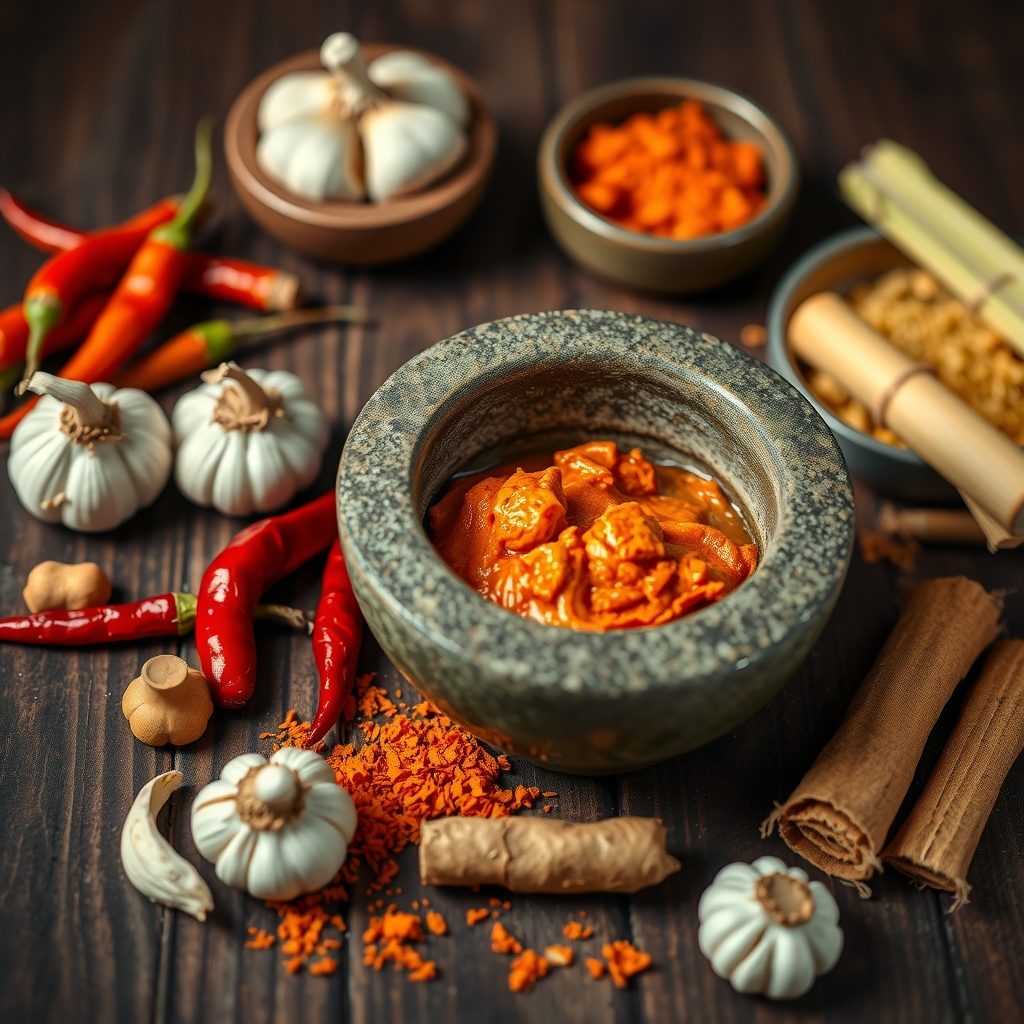
Bumbu is the Indonesian word for the ground spice paste that goes into almost every savoury dish. It is the equivalent of a French mirepoix or a Thai curry paste: the aromatic foundation that is fried before anything else is added. There are dozens of named bumbu, but most dishes are built on five of them, and once you can make those five you can cook a large part of the repertoire.
Bumbu dasar putih: the white base
Garlic, shallots, candlenut and white pepper, ground together. This is the plainest paste and the most versatile, used for soups, vegetable dishes and anything that should be savoury but not red.
Candlenut is a waxy nut that thickens and gives body. Macadamia nuts are the standard substitute, since they share the same texture without the mild toxicity raw candlenut carries.
Because it contains no chilli, this is the paste to use when you want the aromatic base of Indonesian cooking without heat. Sayur asem and many stir-fried vegetable dishes start here.
Bumbu dasar merah: the red base
The white base with red chillies added, ground until smooth. This is the foundation of sambal goreng, most fried dishes and anything that should taste hot as well as aromatic.
The proportion of chilli is a choice rather than a rule. A mild red base might use six chillies to ten shallots; a hot one might use twenty. Taste the raw chillies first, since their heat varies by an enormous margin.
When fried, this paste turns from bright red to a deep brick colour and the oil around it reddens. That colour change is the signal that it is ready for the next ingredient.
Bumbu kacang: the peanut base
Ground peanuts with garlic, chilli, palm sugar, tamarind and a little soy. This is the satay sauce and the gado-gado dressing, and it is used as a finished sauce rather than a fried base, though it is often made by frying a paste first.
The texture is the variable. A smooth paste is more of a sauce; a chunky one is closer to a condiment. For satay a slightly loose, pourable consistency is correct; for gado-gado it is thicker and clings to the vegetables.
Sweetness from palm sugar is what distinguishes it from a Thai peanut sauce, which leans saltier and often includes coconut milk.
Bumbu kuning and bumbu Bali
Bumbu kuning, the yellow paste, gets its colour from turmeric and its aroma from galangal, lemongrass and candlenut. It is used for grilled chicken, fish and steamed dishes, and it is the paste behind the well-known grilled chicken of Central Java.
Bumbu Bali, despite the name, is a general-purpose Balinese-style paste of shallots, garlic, chilli, tomato, palm sugar and shrimp paste. It is sweeter and more complex than the red base and is used for fried chicken, eggs and tofu, often finished with a squeeze of lime.
Both follow the same method as the others: grind everything to a paste, then fry it slowly in oil until the raw smell disappears.
The method, and why the frying matters
Grind the aromatics to a smooth paste, adding a little oil to help a blender or a little water if using a mortar. A coarse paste will leave lumps of raw shallot in the finished dish.
Heat a generous amount of oil in a pan over medium heat. Indonesian cooking uses more oil at this stage than European cooking does, because the oil is what carries the flavour into the dish later.
Fry the paste for eight to twelve minutes, stirring, until it darkens, becomes fragrant, and the oil separates and pools at the edges. This step is called tumis and it cannot be shortened. An under-fried paste tastes raw and bitter, and no amount of later simmering fixes it.
Only when the paste is properly fried do you add stock, coconut milk, meat or vegetables. The paste is the flavour, and it must be built before anything dilutes it.
For storage, double the quantity and freeze half in a flat bag. The paste freezes for three months, and having it on hand turns a one-hour dish into a twenty-minute one.
Questions, corrections or a variation from your own kitchen? Use the contact page.
Recipes to try next
More reading: Regional Indonesian Cooking, Indonesian Pantry Essentials.