Sayur Asem
Sayur asem is a tamarind-soured vegetable soup, and its whole purpose is contrast. Next to rendang or fried chicken it is light, sharp and faintly sweet, the thing that makes a heavy meal edible past the second plate. It is a Sundanese staple from West Java, and it is unusually forgiving: the vegetable list is a guide rather than a rule, and whatever is in season can go in.
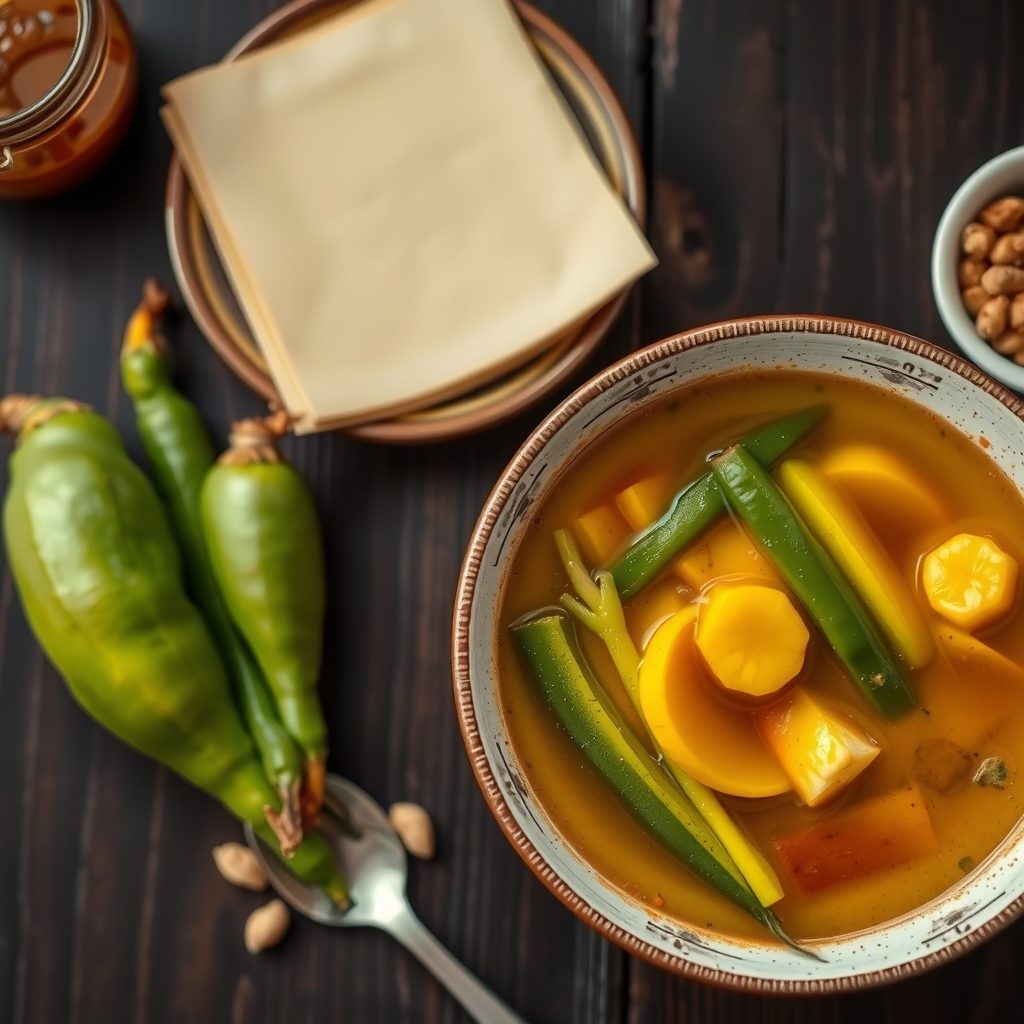
Ingredients
- 1.2 litres water
- 100 g raw peanuts, shelled
- 1 corn cob, cut into 4 rounds
- 100 g melinjo or young jackfruit, cut into pieces
- 1 chayote or 1 small courgette, cubed
- 100 g long beans, cut into 4 cm lengths
- 1 small aubergine, cubed
- 80 g young papaya or cabbage leaves, sliced
- 3 tablespoons tamarind paste
- For the paste: 5 shallots
- 3 garlic cloves
- 2 red chillies
- 2 cm fresh galangal
- 2 bay leaves
- 1 tablespoon palm sugar or brown sugar
- 1 teaspoon salt
- 1 teaspoon cooking oil
Method
- Bring the water to a boil and add the peanuts and corn. Simmer for 20 minutes, because they take longest and everything else is timed around them.
- Meanwhile blend the shallots, garlic, chillies and galangal into a smooth paste with the oil.
- Add the paste to the pot along with the bay leaves, tamarind, sugar and salt. Simmer for 5 minutes until the broth smells aromatic.
- Add the melinjo or jackfruit and the chayote, and cook for 8 minutes.
- Add the long beans and aubergine and cook for 5 minutes more.
- Add the papaya or cabbage leaves last and cook for 3 minutes. Overcooked greens turn the broth bitter and khaki.
- Taste and correct. The soup should be sour first, then sweet, with salt holding it together. Add more tamarind if it tastes flat, more sugar if it is too sharp.
- Serve hot with rice, or at room temperature, which is how it is often eaten at home.
Notes and tips
- The vegetable list is genuinely flexible. The constants are tamarind, peanuts and some kind of corn; the rest is whatever is fresh.
- Tamarind pastes vary in strength. Start with two tablespoons and taste before adding the third.
- Melinjo is traditional and slightly bitter, and hard to find outside Asian markets. Young jackfruit is the usual substitute; green beans and extra corn work too.
- This soup improves overnight. The sourness mellows and the peanuts soften further.
- Do not add the greens early. They are the reason so many home versions taste dull.
Questions
Is sayur asem vegetarian?
Yes, as written. It contains no meat, fish or shrimp paste, which makes it one of the few Indonesian dishes that is naturally suitable for vegetarians.
What if I cannot find tamarind?
Lime juice or rice vinegar used carefully will sour it, though the flavour is one-dimensional by comparison. Tamarind blocks are widely available and keep for years.
Can I add protein?
Yes. Tempeh, fried tofu, or a few beef ribs are all common additions. If you add ribs, simmer them for 45 minutes before starting the rest.
Why is my soup bitter?
Almost certainly overcooked greens, or too much tamarind. Both are corrected by adding a little more water and a pinch of sugar.
Cooked it? Tell us how it went on the contact page — corrections and regional variations are always welcome.
More Indonesian recipes




Cooking notes: read our Bumbu Spice Paste Guide and Regional Indonesian Cooking.